October 27, 2026
Senflow wins a Tech4Good Award at Leeds Digital Festival
Blog


Track every EHCP from request to annual review, with deadlines, provision and evidence in one place.
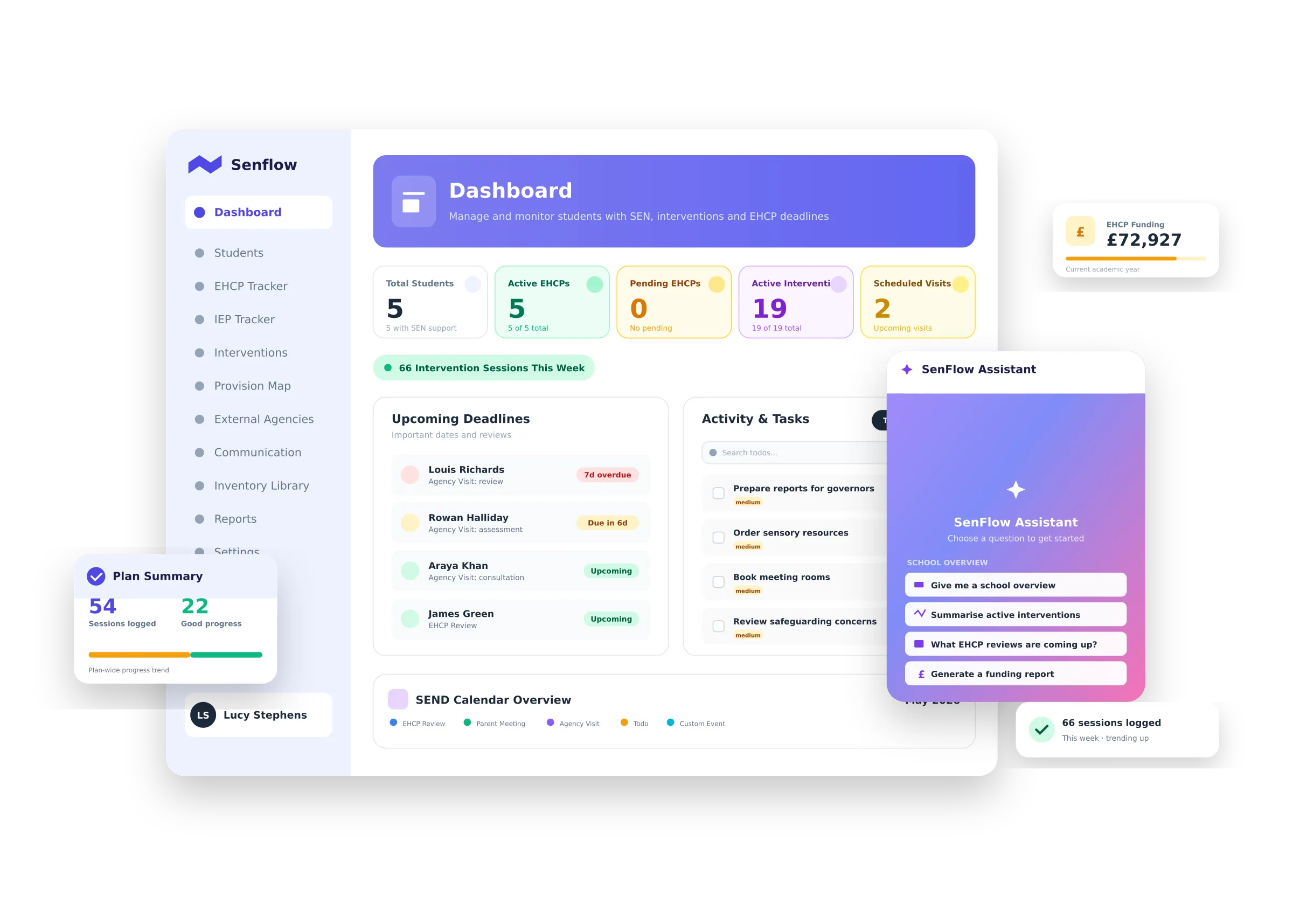
The local authority issues the plan, but the school carries it. Section F provision has to be delivered as written, evidence against every outcome has to be gathered week by week, and the annual review has to be held within 12 months with reports back to the LA on the timescales set out in the SEND Code of Practice. In most primary schools that whole process sits with one SENCO, a spreadsheet, and a diary reminder
Section F of an EHCP sets out the provision the child is legally entitled to: what, how often, and who delivers it. Senflow turns each Section F line into a tracked intervention with a named member of staff, a frequency and a cost, so you can see at a glance whether this term's delivery matches the plan. If a TA is off for three weeks, the gap shows up, not at the review six months later.
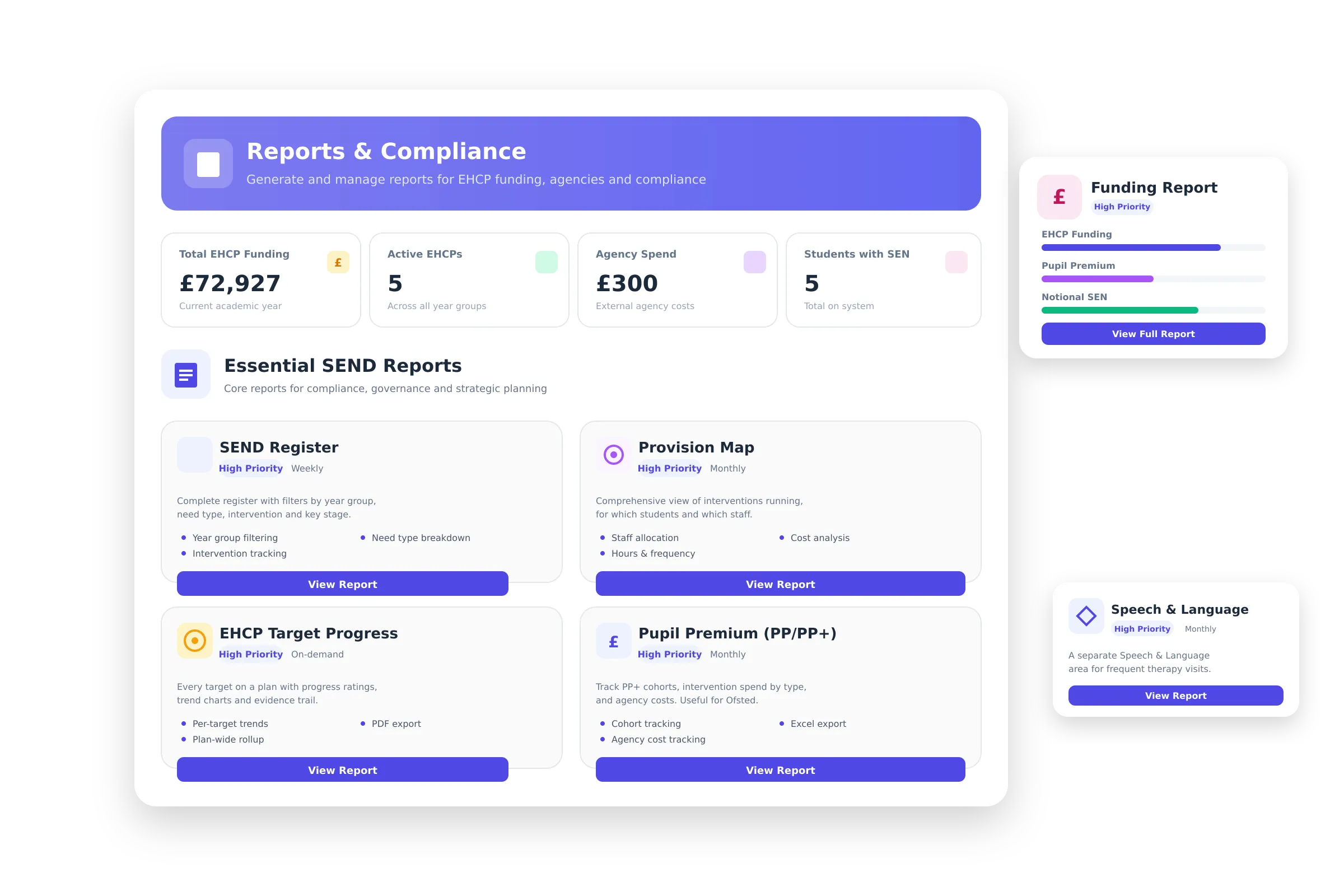

Section E outcomes are what the annual review judges the plan against, and "we ran the intervention" isn't evidence of progress. Session notes, assessment scores and observations in Senflow are logged against the specific outcome they support, so when a parent or the LA asks how a child is doing against Outcome 3, the answer is already there. Nothing gets rebuilt from a spreadsheet the night before.
Every EHCP must be reviewed within 12 months of being issued or last reviewed, and for Year 6 pupils the review that names a secondary placement has to be completed by 15 February. Senflow calculates the review date from the plan, flags it a term ahead, and generates the review report from the provision and evidence already recorded. Views from parents, the child and other agencies are collected in the same place, and the report goes to the LA within the two weeks the Code of Practice allows.
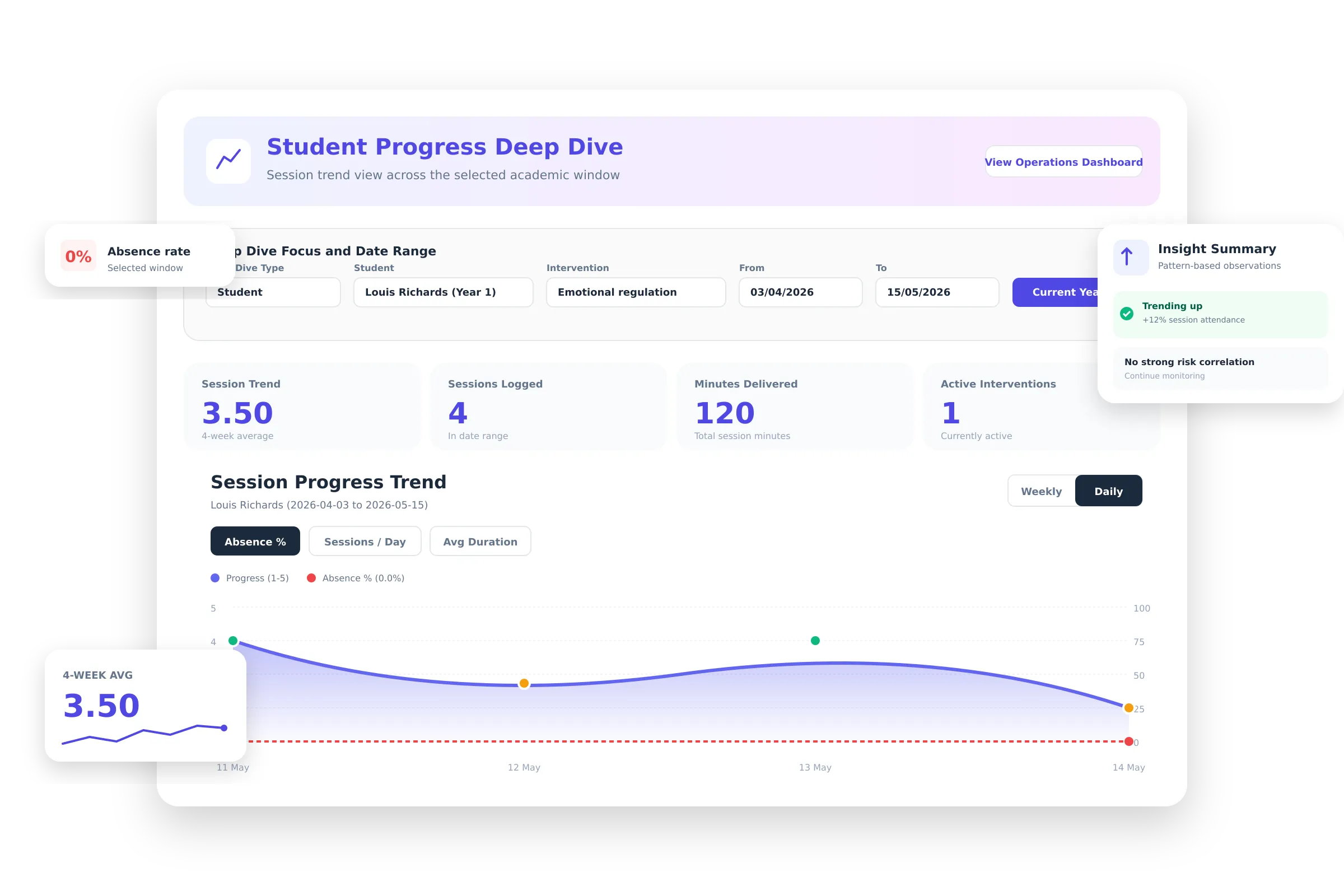
Send us the plans and we load them into Senflow, matched to the pupils already synced from your MIS through Wonde. Outcomes, provision and review dates all in place from day one. Nothing to retype.
Senflow works out the next annual review from the plan dates and flags it a term ahead, including the 15 February deadline for Year 6 transitions. One dashboard shows what's due across every EHCP in the school.
Each Section F line becomes a tracked intervention with a named member of staff, a frequency and a cost. Sessions are logged as they happen and recorded against the outcome they evidence.
When a review is due, Senflow pulls together the provision delivered, the evidence logged and progress against each outcome. Parent, pupil and agency views are gathered in the same place, ready to go to the LA within the two-week window.

Every EHCP runs on statutory timescales set out in the SEND Code of Practice. Here's what they ask of a school, and what that looks like in Senflow.
“ Senflow has genuinely improved how we work. The platform is intuitive, saves us hours each week, and keeps everything organised in one place.“

Since using Senflow my practice as a SENCO has revolutionised. I have the freedom and power to be the kind of SENCO I want to be and my school needs. Paperwork has hugely reduced and creating reports is a job that is complete in a few clicks. I am able to manage whole school provision and manage the cost more efficiently. I feel more in control and knowledgeable about what is happening for individual children and can work collaboratively with their families in the full knowledge of their everyday provision. I can see who, what and when a child is receiving additional support - something I would usually need to chase and spend time collating. Every teacher is now accountable and helping us build the picture for children with SEND and therefore improving our overall culture!

“ Senflow has streamlined everything we do for SEND. It’s simple to use, saves us hours each week, and the support is outstanding.”

"Senflow has made a huge difference to my role as SENCO, significantly reducing the administrative burden of managing EHCPs and SEND provision. The system is intuitive and saves valuable time, allowing me to focus more on supporting pupils and staff. Our teachers love using it too - it's improved consistency across the school and strengthened communication between staff. The support from Lucy and Dom has been exceptional throughout. I would definitely recommend Senflow to any school looking to streamline their SEND processes."

Brookfield Court, Selby Road, Garforth, LS25 1NB